
Anne Lastman
Suffering has been in existence since time immemorial.
Philosophers, thinkers, and theologians have, throughout time, invested much in the pursuit of an answer to the problem of suffering, with at times astonishing and at other times beleaguered results. Even the most stoic of saints, whilst embracing the purpose of suffering, always deferred to Jesus as a need to understand the nature and its effects because suffering is alien to the human design. It was not inbuilt into the human blueprint and is an interloper
The human design has built within it a desire to turn towards its creator, and indeed even when an evil is perpetrated it’s rarely thought of as an evil but something which was needed or even something good but has an evil by-product suffering. An abortion is not often considered the killing of a human person but instead it’s the removal of an inconvenience. A present difficulty. Only a “bunch of cells,” “fetus” “product of conception” (imageless-not human) not someone with its own right to life but parasitic.
The important point about the different types of suffering and understanding of these is the sufferers themselves and how they endure the suffering. Salvific or heroic suffering is one where the individual endures and subsists with all his/her suffering within the love of Christ. The soul of this sufferer is lifted towards Jesus and unites his/her suffering with the sufferings of the incarnate word of God. In being able to unite and share the suffering these individuals who are able to suffer with heroism, display a particular grace and bring before the eyes of the world a vision of how Jesus Himself suffered. It’s interesting that heroic sufferers are usually a microcosm of humanity and appear to bring upon themselves sufferings related to the sins of the time and society.
It must be said that not all suffering is “heroic” or “salvific” and indeed some called to this particular suffering may not be receptive and can become embittered through pain endured. However, for those who do accept the suffering and accept it as something which supports the Lord do so with assent and quiet graciousness. For these the understanding of suffering is slowly and radically changed. Indeed, so much so that even in the visible they slowly begin to reflect the One whom they wish to emulate. Jesus. The Crucified one and the “salvific” sufferer merge and it’s possible to see what St. Paul says, “I make up in my body what is lacking in the sufferings of Christ for the sake of His body, the church.” (Col.1: 24).
Whilst the modern mind would see “offering” up of suffering as anachronistic, it’s in fact a co-operation with Jesus and His suffering and offered in union with His own which is of infinite value. It’s as co-operators with the sufferings of Jesus. Without understanding suffering and simply enduring because there is no way out of the situation, is to waste the opportunity given to work with Jesus for the redemption of mankind. Unwilling suffering cannot redeem because like Jesus (Mt 26:36-46) and Mary of Nazareth (Lk 1:26-38) a personal “fiat” must be given and in this assent the nature of the suffering changes from one which is thought to be brought about by human weakness, sickness, error, to a Cross type of suffering.
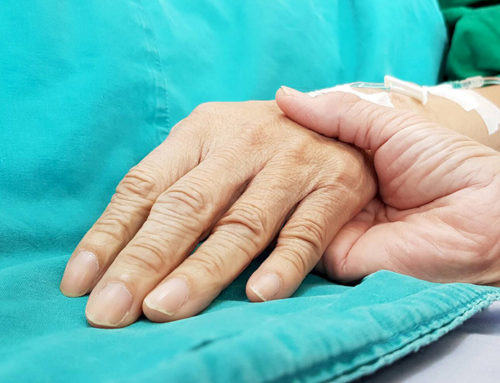
Suffering is a mystery and because this is so it permits a glimpse into the mysterious love of God. It can show the life and love of the Trinitarian community. From all time He loved knowing that He would suffer, yet He loved all the more. Suffering calls for immersion into this mystery, which appears to have no answer except, like a terminal illness, which has unexpectedly appeared. The mystery encompasses shock, fear, tears, loss, end of dreams, leaving, change of life, fear of the world to come, saying goodbye we wont be walking together. We wont hold hands. The mystery hides much the ache of suffering.
The value of salvific suffering is multifaceted; however, it’s slanted towards the theological and anthropological. At the anthropological level suffering is the mystery which the human person has introduced into his own previously innocent being. It was not in the created order of God. He indeed, declared that all was “very good” (Gn 1:1-31) there wasn’t any “not good.” Yet this is the mystery, which God through Jesus had to experience in order to be able to again become immersed in his creation. Until suffering and evil entered into creation through the human beings’ rejection and sin, the creator was not distant from His creation. (Gn 3:8)) However, following the rejection there was something new separating creator from the creation so in order to resume the friendship and communion, He the creator, (through Jesus) determined the reestablishment by participating in the now existent suffering and death.
God, in His suffering over the failure of His creature did not abandon them but decided to rescue them through his experiencing the affects of sin, suffering, thus leading to need for Jesus to become like the creature and accept all of the creature’s sufferings, whilst remaining God. He was able to experience suffering and death and as man/ God be able to defeat it. This ensured that suffering and death would never be the barrier to full communion between the creature and the creator. The marks of suffering could enter into the paradisial (Jn.20:24-28) however, suffering itself would never be permitted to enter.
Humanized suffering is a suffering which acts as the conduit by which individual, group and society are led to a state of refinement. An example of this would be the seemingly futile, slow and painful death of a mother of seven children. Driven by a life filled with children and love she accepted first the suffering (slow and painful) and then death in a manner which did change those who surrounded her. Those who encountered her on her journey became for her, Simon of Cyrene (Mt 27:32). They watched her suffering and manner of acceptance, carried her cross briefly, and then returned the cross to her to continue her journey. It was her cross to carry and only she was able to carry it towards its ultimate destination-death. In this exchange the transformation was both ways and assured.
Salvific suffering is for the transformation of others and a gift for the Lord. In the moment of finality, it’s for Him and with Him that suffering finds a salve. The spirit of this love refines the human in a spirit of sacrifice. Earthly suffering when accepted in love, is like a kernel containing the seed of new life, the treasure of divine glory to be given man in eternity.(Salvifici Doloris St. John Paul II).
The question asked is “why suffering?” Suffering can never be separated from evil or an absence of something, which causes pain. Suffering and evil are the two “things” which God has not put His seal upon and declared that they were “very good.” (Gn 1:1-31) Indeed these two dimensions when viewed parallel to themselves and then parallel to creation clearly show that as God’s uttered “Word” brought forth life-giving works out of the existing chaos as the words of the adversary (Gn.3) brought forth suffering and death.
An interesting situation is encountered when the “why evil?” and “why suffering?” question is posed, as the question is never asked of the human person and their actions but of God. The response to question that evil and suffering not intended by God but introduced by “man” himself, then unreasonably man asks “why?” why permit such suffering? According to St. John Paul II, the answer to the “why” “is above all a call, a vocation. Christ does not give us an abstract answer, but rather he says, “follow me!” He offers the opportunity, through suffering, to take part in his own work of saving the world. And when we take up the cross gradually the salvific meaning of suffering is revealed to us.”
While the personal dimension of punishment is affirmed, it has meaning in so far as it serves “to repay the objective evil of the transgression with another evil, but first and foremost because it creates the possibility of rebuilding goodness in the subject who suffers. (Salvifici Doloris, St John Paull II) This is important to the understanding of the mystery of suffering. Because the mind is profoundly disturbed by suffering. However, suffering which can be used or permitted for conversion, or the rebuilding of the whole of the sufferer, is an offer of mercy. St Augustine says suffering is not God’s work. However, “it lay within his providential purpose” God’s answer to the meaning of suffering and death intensified the mystery because of His own participation in that mystery. So, the ostensibly meaninglessness of suffering and death acquired inestimable value because He Himself chose to experience it. It acquired meaning through the cross and death of His son Jesus.
The solidarity with which Jesus united himself with the human order compounded the mystery further. Suffering, an initiative of the creature brought with it the expression “Felix culpa” for it brought forth a sanctification greater than would have been possible without the suffering. His own involvement, the “felix Culpa, meant a healing of the of the creature through his presence.
As the Church on its journey towards God, encounters and must deal with all manner of suffering, so too must all of us. Suffering is inseparable from “Adam” it’s his boast. That he introduced suffering, which beckoned God into participation through the cross. Evil and suffering cast humankind out of both the and the created order yet remains an active member of both and as such is part of a unitive system. In this system the human person in his/her suffering is not deprived of that connection to the divine, Jesus. This is because human is essentially on a journey of becoming again, what was meant to be in its origins. The journey towards the ultimate completion lies ahead until his divine home reached.
The meaning of suffering can be understood at various levels, that is, suffering as a response to a painful event, to sorrow, to distress, to physical illness, emotional suffering which always involves guilt, shame, and violence in the being, or in actions and ontological suffering, Self-laceration is the intent of suffering. It is the Edenic choice and the root of all human imperfection.
The suffering of Jesus on the cross and the suffering of the first thief also on the cross clearly shows that in the acceptance of true suffering, false suffering withdraws. True suffering leads to a moment of clarity and grace.) Refusal to suffer as per the other thief, rejects the opportunity to bring wholeness and completion and a loss of grace.
Jesus’s redemptive work on the cross did not remove physical suffering because it’s the fruit of original sin and to have removed this would have meant change the course of Creator God’s plan. God’s word cannot be revoked; therefore, it remained that the creator would continue with the original plan whilst accommodating the new reality called sin/suffering. Human history with its ‘sin of the world’ (Jn 1:29) has in effect incorporated suffering into its structure And whilst not God’s wish He incorporated the failure and prepared the salvation. As St. John Paul II “suffering acquires it final meaning for humanity from God, that is, its ultimate meaning is given us through God in the story of the life and death of Jesus Christ. His experience of man’s condition brought him into the solidarity of suffering.” (Salvifici Doloris)
The origin of suffering is not divine, however, the response to it is. Forgiveness. A God, who is total love, cannot offer other than forgiveness. His solidarity, and response mean that His involvement with the creature, the sinner and suffering is unconditional and his compassion leads to the healing of human pain. The revelation of God took place on the cross. The sinner once repentant and forgiven is marked with a sign of protection (Cain?) and we know that those forgiven are called to mediate for and on behalf of those who still remain in darkness.
Sin need never and can never be forgotten, however it can be forgiven because the suffering of Christ transmutes regretful suffering and establishes it within the divine life and when possible forgiveness allows entry into the life cycle of love and become recipients Emmanuel type mercy. Forgiveness is not a human initiative but the work of the Holy Spirit permitted by Father God, through the intercession of Jesus. It’ a divine olive branch offered and sealed by the limitless love of Jesus, through his own suffering for them. The human person is neither angelic nor beast and because of this he/she suffers through body, mind, spirit. The body manifests the suffering of the spirit. Acceptance of the pain begins the turn towards other than self. Dietrich Bonhoeffer said, “we must learn to regard people less in the light of what they do or omit to do, and more in the light of what they suffer.” Like an abortive mother who suffers for her mistake but forgiven God looks into the heart and loves. A true Epiphany is encountered when a forgiven individual turns resolutely towards God, and Jesus is that epiphany of God’s healing power. He is the definitive “Rapha-el,” who transforms suffering into healing and love. This fusion and union embalmed with grace and love.