December 9, 2025
By Frederick Fakhrizadeh, M.D.
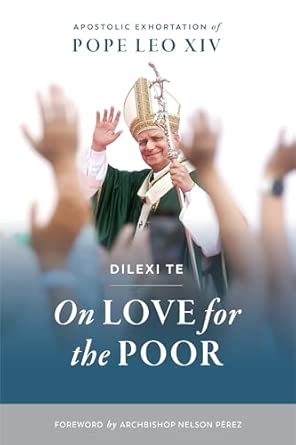
Pope Leo XIV’s first apostolic exhortation, Dilexi Te, challenges the faithful to approach and interact with the poor in a manner that embraces their dignity and calls us to personal encounter with the poor. This message is particularly urgent today, as global debates on poverty and inequality demand a response rooted in dignity and solidarity.
To quote Pope Leo, “No Christian can regard the poor simply as a societal problem; they are part of our ‘family.’ They are ‘one of us.’ Nor can our relationship with the poor be reduced to merely another ecclesial activity or function (DT 104).” In fact, the poor are not passive recipients of aid but active agents of evangelization.
Dilexi Te is an urgent call to conversion and action, summoning Christians to overcome indifference and to see Christ in the “suffering flesh” of the poor. The condition of the poor is presented as a constant “cry” that challenges individuals, societies, and the Church. To be unresponsive to this cry is to “turn away from the very heart of God.” (Dilexi Te, 8)
In Dilexi Te 49-52, particular attention is given to the care of the sick and suffering, where Pope Leo highlights the signs present in Jesus’ public ministry such as the healing of the blind, lepers and paralytics to show how the “Church understands that caring for the sick, in whom she readily recognizes the crucified Lord, is an important part of her mission.” He further highlights that the “Christian tradition of visiting the sick, washing their wounds, and comforting the afflicted is not simply a philanthropic endeavor, but an ecclesial action through which the members of the Church ‘touch the suffering flesh of Christ.’” (DT 49)
…