When Science Meets Sacred Imagery: Reflections on Communicative Responsibility
On December 18, 2024, Lund University published a short outreach video originally titled “Did the Virgin Mary speak untruths in the stable 2000 years ago?”
The video addressed the topic of parthenogenesis — a natural form of asexual reproduction found in certain animal groups. The scientific content itself was straightforward. Yet the communicative framing of the video drew significant attention: it was filmed inside All Saints Church (Allhelgonakyrkan) in Lund, surrounded by religious imagery, and released just a week before Christmas. These choices shaped the video’s reception in ways that extend beyond the scientific explanation itself.
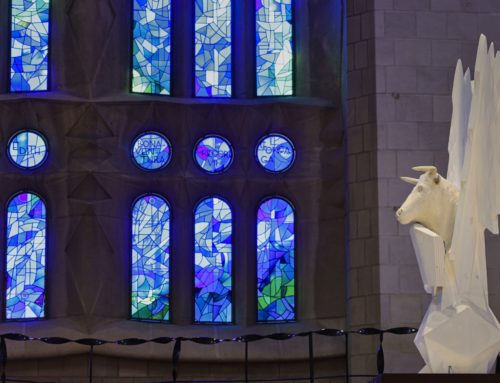
The presentation opened with the question, “Is virgin birth possible?”, followed by scenes from a Nativity display. Throughout the video, Christian symbols remained visible: an icon of the Virgin Mary with the Child Jesus, a stained-glass window depicting baptismal imagery (positioned between church windows representing post-Ascension prayer and St. Peter’s call to repentance), and Christmas decorations with angels. Meanwhile, the biologist explained forms of parthenogenesis in arthropods, fish, amphibians, and one known case in birds, and later described experimental attempts in mice to induce maternal cells to act as sperm through genetic modification. Portions of this explanation appeared with Marian imagery in the background, reinforcing interpretive associations for many viewers.
The original title itself deserves reflection. Its phrasing — “Did the Virgin Mary speak untruths in the stable 2000 years ago?”—goes well beyond a neutral introduction to parthenogenesis. By directly questioning Mary’s truthfulness within the Nativity narrative, it introduces theological and moral implications unrelated to the scientific content. Even without presuming to know the producers’ motives, the combination of this title with the decision to film inside All Saints Church shortly before Christmas suggests a deliberate rhetorical juxtaposition rather than an incidental overlap. As a Catholic viewer, I found not only the original title but the overall framing of the video within a sacred environment to be dismissive and troubling, even if the full intention behind it remains unknown.
Reactions to the video on the university’s Instagram post were mixed. Several viewers expressed that they felt insulted or offended by the use of a sacred space and sacred symbolism in this context, while others questioned the appropriateness of presenting such a topic in a church shortly before Christmas. At the same time, a few responses were positive; one viewer, for example, commented, “I want to study there.” This range of reactions illustrates how strongly the chosen setting and timing shaped the interpretation of the video.
After discussing these issues with some friends, my husband contacted the university’s editorial team expressing concerns about the rationale for the framing choices. The team responded promptly and transparently, explaining that the church setting had been selected for its recognizability and visual appeal, that permission to film had been granted by the parish priest, and that the release date was chosen because “Christmas was near.” They also indicated their willingness to adjust the caption if it had contributed to misunderstanding and emphasized their commitment to fairness in representing diverse cultural backgrounds. Following this correspondence, the editorial team changed the title to the more neutral “Is virgin birth possible? What is virgin birth?” This change stands in some tension with the explanation that the release date had simply been chosen “because Christmas was near.”
While the editorial team’s response was polite and framed in terms of respect and openness, the practical outcome was minimal: only the title was altered. The scenery, location, and symbolic framing remained exactly the same. Their reply — “We can modify the text in the post, so it doesn’t mention Virgin Mary”—addressed the wording but not the deeper issue that the video’s visuals continued to invoke explicitly Christian themes. This discrepancy between stated sensitivity and the lack of substantive adjustment rendered the final presentation dismissive in practice, irrespective of the intentions behind it. Despite this, no public clarification or apology was issued.
Shortly after initial concerns were raised, the comments on Instagram were limited or disabled, making further public discussion impossible. For some observers, this action reinforced the perception that the broader communicative implications of the video were not fully acknowledged.
This case highlights a broader issue relevant to universities and science communicators worldwide: the importance of ethical awareness and sensitivity to religious symbolism. Context — including space, season, and visual framing — shapes how messages are interpreted. A secular society does not eliminate the presence of faith; rather, it challenges institutions to demonstrate equal respect toward all religious traditions, including Christianity, which can sometimes be overlooked in Swedish public discourse.
Olga Romantsik, MD, PhD