
In the Ethical Evolution of Care
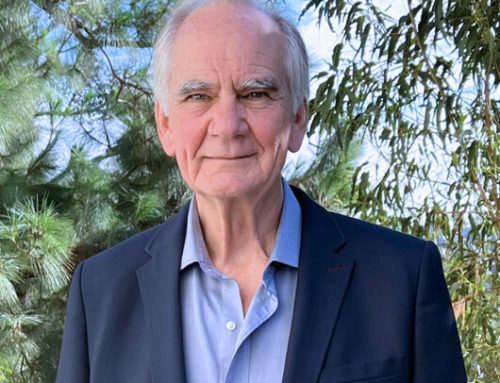
Prof. Filippo Maria Boscia
The breakthrough into traditional medicine of Artificial Intelligence and Machine Learning (ML) is now a particular interest. Innovative technologies, on the one hand, are a source of new enthusiasms exalted, but more and more often they are lived with some concern. There are many who believe that the Medical Art could enter in crisis that magical doctor-patient alliance, which constitutes the foundation higher for relationships of help and empathy.
All men of science and health professionals do not demonize innovation a priori and technology: however, they want to emphasize that empathy is enclosed and rediscovers the value essence of the profession.
We need to welcome, experience and carefully verify the cultural changes that occur in making medicine, always keeping in mind that the clinical method is the driving force behind the primary health professions: It must never be compressed by business or economic needs, never retreat on the of the human. It is essential and necessary that every innovation be governed by the human mind, so that the HUMAN IS NEVER IGNORED.
Technological innovations, which rapidly evolve from season to season in season and with difficulty are followed by human ingenuity, require a wide range of open-mindedness, which responsibly addresses the criticism of systems because may prudence, wisdom and hope never be lacking.
Stopping innovation is not possible, but controlling it it’s necessary!
Just when enthusiasm is at its peak, research activities must become more active: in them must never lack those predominant activities forecasts that alone can ensure the absence of any type of risk and consequently allow a promising, safe and appropriate use.
While it is important to stimulate every new idea and any entrepreneurial capacity, on the other hand, it is necessary to lay the foundations for the consent to use is truly informed.
Many wearable technological devices are now certified as medical devices. Smart watches are an example of innovative sensors able to carry out, moment by moment, non-invasive analyses for the verification of orientation signals. There are many wearable devices and developments, well beyond the foreseeable, are increasingly easier Accepted.
It must be reiterated that in every path of innovation We are pilgrims in trying to take the path of the greatest possible good: we can only do this if we are able, with humility, to give answers to doubts, questions and queries aimed at identifying connections of good, fairness and ethics.
The human project and every path of humanization must always starting from precise ethical questions.
Speaking of A.I. and humanization, it is as if We were faced with the classic two-sided coin. Each medal has its own And so each technique has its reverse. This bipolarity we have always known! It is like a diamond that has a double side with it: from one side shiny, on the other sharp.
We did the same experience with nuclear power and today we have with A.I. also from To examine two sides, two faces: one of good and the other of evil.
Even the We know that ultra-modern drones can be used to deliver goods at home or to bomb residences or institutional headquarters.
In front of the automatic cybernetic machines (Machine Learning) and in front of augmented intelligence, which today travels towards automatic recognition facial profiles and emotions, in an attempt to imitate as much as possible human qualities, it is necessary to reflect and acknowledge that MACHINES are nothing more than warehouses of knowledge, non-critical historical archives, structures that include systems efficient and intelligent, but never cognitive.
Personally I find it hard to accept the definition of Artificial Intelligence, now in use: Intelligence is a human mental process, with an evolved brain structure, capable of inventing, building special machines, organizing them, making them usable, always with the awareness that the machine can never have sensory performance or cultivating sense of the intellect.
The machines lack wisdom: as cold combiners they understand only what in They have been entered and set, they do not go further.
Are Foolish, unwise, they don’t think further, they don’t understand.
Assemble data, store and can mix what is stored.
Not they process knowledge, but simply store it.
Not have intrinsic value in the search for truth, even though they were created in balance with nature.
The machines are able to act more automatically than autonomously.
In synthesis, provide functions for what has been set up in them.
From doctor I am particularly attentive to relationships, feelings and on this profile no machine will be able to help us.
Near the Department of Computer Science of the University of Bari, directed by Prof Lanubile, are working on the interdisciplinary nature of computer science, with specific reference to both facial recognition (which already exists in airports) but also to the recognition of emotions.
In a recent meeting with the precise question: “Will a machine be able to to recognize emotions?” Prof. Lanubile replied that the automatic recognition of emotions will certainly be made possible from A.I.: it will be when we have programmed an algorithm that, emulating in toto a human being will be able to represent emotions, vision skills, of speech, reasoning skills.
For the recognition of emotions there are already elaborate models, so-called circumflexes, able to represent the pleasantness of the spirit or the unpleasantness of unexpected situations.
Today horizontal and orthogonal dimensions are able to map a network of emotions that can be expressed in 6 different faces: Expert systems are able to to make explicit the learning of multiple mimics.
Today the recognition of emotions that is already feasible and is a well-established method, accustomed to interpreting facial emotional expressions.
Equally recognition from speech, so much so that they are already available in trade dedicated programs.
Are basic sensors for emotion recognition have been developed and these, mixed with the E4 sensor, could detect and manifest many emotional cues, including pain or joy.
A company founded in Boston is called “Empatica”. This builds wearable devices mainly used for the early recognition of epilepsy, right at its onset of seizures.
Helmets have been developed to capture particular emotional conditions, able to catalog, train models and understand particular emotional states.
Goes highlighted that A.I., based on the machine learning of emotions, It already works very well today but in the future, so the scientists report, With more and more data available, every function will perform the best possible.
Maybe we must believe it, even if, personally knowing the singularity of the people, I think it will be really difficult to interpret the individual multiple emotions.
Not I want to be skeptical about innovation, but I firmly believe that the sense of the intellect, as a whole, will be difficult to emulate in technology.
I have I have loved the Medicine of the 5 senses + 1 for over 60 years, I know endorphins and their actions/reactions, I have always defined them as bolts from the blue, capable of to travel in a millionth of a second the cerebral convolutions. I learned also the revolutionary evolution of thought, of the human mind, which from the logic of intuitions has moved on to marry the analogical and I understand well that for nothing and for no reason in the world should we neglect the importance of the senses, of the gaze (sight), of listening (hearing), of touch (touch), of taste and of smell: the senses create relationships in contexts of high uniqueness empathetic and on these profiles I would never want human responses to be computer programs, even if these can facilitate us for the maximum speed they have in processing all the answers to be given.
Pope Francis in a locution to the Bishops had exhorted them to be Pastors in the community of believers and to be so close to their creatures that they have I wear the smell of sheep. Paraphrasing this phrase, as doctors, we We should have the smell of the sick on us because that annoying impact of the suffering serves us to be nourished in compassion, making us spiritually taste even the most bitter of glasses.
This it is the sensory practice of Medicine that has guided me in my 60 years of profession and from which I would never want to leave. I don’t think that the technology and A.I. will be able to fully embrace these frontiers of comprehension.
With I allow myself to point out the beauty, tenderness and pathos of that wonderful “clinical method” of bending down (Klineo) that never known crisis, but which fortunately has never encountered a barcode or an alphanumeric code, even if imposed by globalization.
Let’s ask ourselves on why a highly human science, a true Art, today feels the need to be rehumanized today. Probably with a lot of presappochism we have progressively dehumanized.
Me I refer to the Medicine of knowledge, conscience and wisdom, which today
Has the fervor and warmth of the human has been lost.
It is necessary to a cultural hybridization that does not disperse these cultural and moral experiences in wisely welcoming the positive applications and usefulness of a cybernetic technology.
Without never be disillusioned let’s face with joy and with prospective positivity Artificial Intelligence that certainly can:
- Improving diagnosis and treatment services
- For its infinite and inexhaustible capacity to store personal data and profiles will have an increasingly increased memory and aptitude for processing health statistics and building personal and complex health records.
In the digitization of data, processing answers rapid, effective and immediate, it will assemble even the most varied news, even those that are less aggregable, which will be indispensable for interpreting and read the anamnestic globality and the singularity of people. Applications will be indispensable in applying multiple options in telemedicine, teleconsultations, remote robotic surgery, opening horizons of other admirable and healthy opportunities.
- Also in terms of improvement of the health offer we will certainly have advantages for a better and more appropriate health organization.
- On the positive side, thanks to technology, we will be able to in the future, to benefit from better human development and to provide for wise cooperation and integrations around the world.
- Maybe we should recommend to everyone the indispensable need to always place the person at the center in order to start from this centrality all the operational radii, assembling in an ethical unicum: human rights, empathic vision, personal, professional, social and constellations of a universe never to be denied.
- Perhaps, however, in the future we will have to be able to avoid the bulimia of computer means to avoid anorexia of ends at the same time.
But now allow me a recommendation:
The art of medicine should never be obscured by laws of market!
If they go into crisis, functions, such as affectivity, accompaniment, scientific, moral, spiritual and social skills, surely those essential canons of and humanity, connected to doing medicine.
I believe these tips are essential to be well adhered to technology, but never suffer it. Frankly, I don’t know if it’s up to so far we have taken the wrong paths… but as an ancient saying goes, “You learn by making mistakes”.
This proverbial assumption nevertheless stimulates us to starting off on the right foot, starting from learning the mistake to avoid to fall into its paradox. Learning from mistakes is a good and positive thing. E’ a sign of humility and greatness but above all of great responsibility.
E’ it is precisely on these points that any drift of technological medicine must be rediscussed of the minimum time, of the “alarm clock around the neck” of the chain of corporate assembly, which has now become a “mantra”.
The Medicine that becomes hasty, also to move the technological or to give space for merely bureaucratic tasks, important for other purposes, is a mistake huge! It must be discussed again! We cannot persevere in mistakes already made and We must stop making mistakes!
Let’s rediscuss with wisdom the tasks of a medicine of the person by reaffirming the irreplaceable and essential humanism. Only then did medical sciences will be able to derive maximum benefits from A.I., digitalization, technological innovation.
In this way, sense, artificial intelligence will be a positive construct for our lives and probably then we will have to pursue it and consider it, not an instrument antagonist, but an amplifying and facilitating tool.
I hope that this reflection can hinge on all the problems bioethics related to care, without never neglect the legal reflection increasingly imposed by technology being left over.
Wants that the present reflection would also hinge on a useful discussion related and emerging bioethical issues, but also on all the legal repercussions that advanced technologies reproduce in a different way.
In the context of the Italian Catholic Doctors Association we have discussed a lot on Artificial Intelligence. There were many of us who did not fear it and who welcome it among the most representative and fascinating innovations proposed technological development.
In deepening the various fields of application of Artificial Intelligence (social, industrial, military, police, surveillance, communication, etc.), of which there is a vast literature available on the subject, we have called for two aspects which underline some of the Committee’s recommendations expressed in the opinion of 20 May 2020: “The deadline ‘intelligence’, in line with the English term ‘intelligence’, is not designates properly human qualities conferred on machines, but describes functions that make some machine behaviors similar to those of a human being”.
In every case, without wishing to enter into the examination of the technical characteristics of the various technologies or even robots (with the body, without the body, “stupid”, “intelligent”, which carries out automation or autonomous machinery that is not necessarily anthropomorphic system, etc.), we wish to emphasize the need to have in the professional system the revision of the Code of Ethics of Doctors (latest edition 2014). In this sense, we have also urged the FNOMCeO to implement necessary and unavoidable investigations to provide for consequent Decisions.
E’ It is appropriate today to address the many questions concerning the restoration of humanism in the digital society and reflect on all fields of Medicine, in which artificial intelligence algorithms will be able to give more responses compared to human ones and in which the usefulness of the systems appears stratospheric.
That the healthcare digitization is indispensable in many fields, no one anymore denies it, indeed in Mole they claim it for a better re/organization of assistance in hospital-territory therapeutic continuity projects, in telemedicine, for remote medical consultations (teleconsultation), but also for many emergencies related to the increase in the elderly population and chronic degenerative diseases and even more so in Oncology;
Among the many applications and usefulness there is the study of genetic diseases, the Precision medicine, personalized medicine, predictive medicine clinical drug trials, diagnostic imaging, robotics, surgery, but also other broad sectors, where it is allowed to intervene even remotely.
Undoubted are the advantages, the greater the precision, the less invasiveness.
Without Doubt we should think about artificial intelligence proactively. To watch over and guide progress so that it can be a reality of growth positive for humanity is a positive thing.
Large are now the technological possibilities offered to doctors and also welcomed in enthusiastically. Some underline the concern that a uncontrolled use can damage the relationship with the patient.
It is necessary to This purpose that technocracy, “algocracy” and the “power of algorithms” do not prevail.
If there is prudence, wisdom, humility and great professional preparation and strong ethical and moral profiles, will certainly never be removed between patient and doctor that direct channel of communication and alliance, as well as the possibility of Feeling mutual feelings of compassion and support in overcoming crises human and complex, such as those that open up the prospect of death.
If the doctor, frees itself thanks to artificial intelligence of an important part of his bureaucratic, administrative and managerial work, in the diagnostic-therapeutic activities, will find more time for the conversational relationship with the sick.
To all It seems to us that in this sense the strongly expressed hope wanted by Pope Francis and referred to “Integral Human Development”.
Are precisely the words of the Pope that lead us to underline some points:
- At those who propose to ignore the human we say that Medicine cannot afford to make this serious mistake by embracing only the technologically advanced which alone appears meagre and inhuman.
- At In our opinion, artificial intelligence will hardly be able to replace Human beings in complex surgical operations: we reiterate that technology it must be guided by the human mind.
- Difficult beat the human in terms of creativity! It is not possible to demand from the A.I. to make decisions to respond to unforeseen situations in the most appropriate possible: only the human mind can do it.
- Despite the accuracy achieved by A.I. in routine health care, we note that there are only many limitations that make it inapplicable in treatment pathways complex and multidisciplinary.
- We detect that A.I. does not have reliable empathic skills; A.I. cannot interpret and communicate emotions; cannot replace the conception and the intuition of the human being, can make use of those faculties, wide and which lead to pro-active and winning choices.
In synthesis the role of the human re-emerges, as absolutely indispensable for guiding the path of technoscience: The dynamism of technology will be able to society 5.0 to develop optimally only under the guidance of humans.
We be very careful to exclude the maximum amount of cornerstone of Medicine which is humanization.
Humanization goes beyond corporeality and includes spirituality in a synthesis that is not fractureable.
The Medicine is a profoundly human art that runs through human contexts with a Holistic.
These functions of Medicine are absolutely not replaceable because they are up to the equal corporeality and spirituality.
CONCLUSIONS
Not for ideology, but for real human need, these considerations must be underlined today in contexts defined as post-modern and post-human in which It will be necessary to work to redefine the human, to redefine the deep structures of the common feeling that are necessary for us to recompose the wise vision of our life, the one that is dear to us and that we should cherish and promote.
We doctors we should be careful that the clinic is not suffocated and prevaricated technology. We need to break down the absolute exaltation of technology, but even the self-referential one of “in my opinion” and opening up to necessary Integrations. Consultation Medicine opens up to the “In our opinion”, opens up to the collegiality and develop in Precision Medicine, in Tailored Medicine (tailored medicines) that sees the person at the center.
That’s the most opportune moment to break down those positions that led to the crisis of the human and have led to inhumane relapses, absolutely not tolerable: among these is the tendency to ignore the human and to act according to technological supply chains.
In the current Jubilee path announced by Pope Francis and intensely dedicated to the Hope, allow me to recall a pronouncement contained in the Paul’s theological masterpiece, Letter to the Romans (Rom 5:5)
Spes non confundit, Hope does not disappoint.
This is what the debut of the bull of indiction of the current Ordinary Jubilee, which in the presence of of the Holy Father on 9 May last, was read and made public.
Seizing On this happy occasion, it is perhaps opportune for a Catholic doctor to project himself in the dimension of his Spirit, trying to lower this pronouncement of Paolo in the field of personal, professional and social life.
The doctor in the exercise of his art he must be able to give skillful answers, respons and abilitas are the Latin root of responsibility.
The Responsibility in medicine is not the most feared, that is, the medico-legal one! This responsibility has a much broader value and must never be lacking.
Respons abilitas means response, ability, competence, empathy and much more, so that the C of Catholic contained in the AMCI logo and in the badge that we wear.
Then assuming one’s responsibility means responsibly defending life of every person always, from the dawn of the singamia/karyogamy of birth at natural sunset, reaffirm the seriousness of the conscience and responsibility of the operators, operate and serve the sick in all phases of suffering, fragility and disability, do it with acuity, alert attention, transparency, personal dedication, strength and concentration because going encounter human tribulations is an effective response to the drama/tragedy of the human suffering. This going towards is never lacking and is always associated with that necessary depth that characterizes the encounter of man with man, of the self with the other.
The good Samaritan is an emblematic icon of a hope that saves (SPE SALVI).
Stays the universal experience of evil and suffering is always a mystery, but we we will be helped more and more to penetrate this mystery the more as men we will be able to be close to and live the ethical and moral depth of our professional commitment.
I wish Conclude with a wish:
Lit from faith always, even within systems of insufficiency and inadequacy of care facilities, with or without augmented intelligence, with or without intelligence with or without machine learning, our actions are always in able to inhabit the future of man with dignity, responsibility, charisma and Christian charity.
Prof. Filippo Maria Boscia
New Book Bioethics-2025 – F.I.A.M.C.