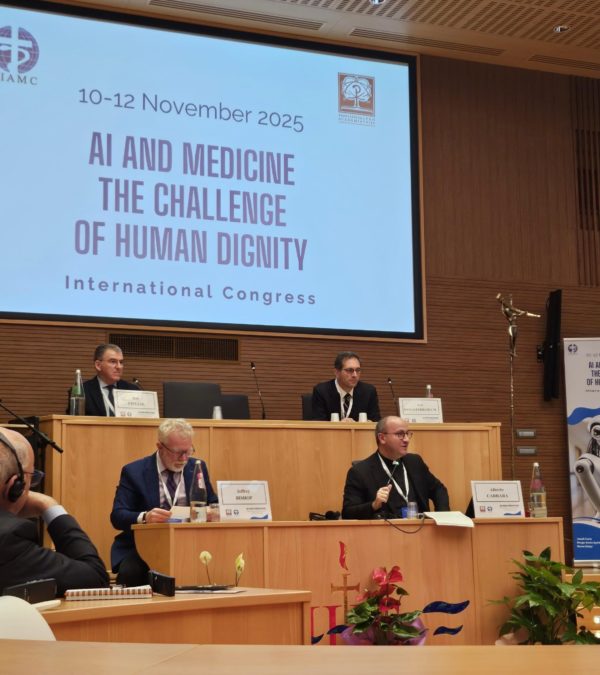
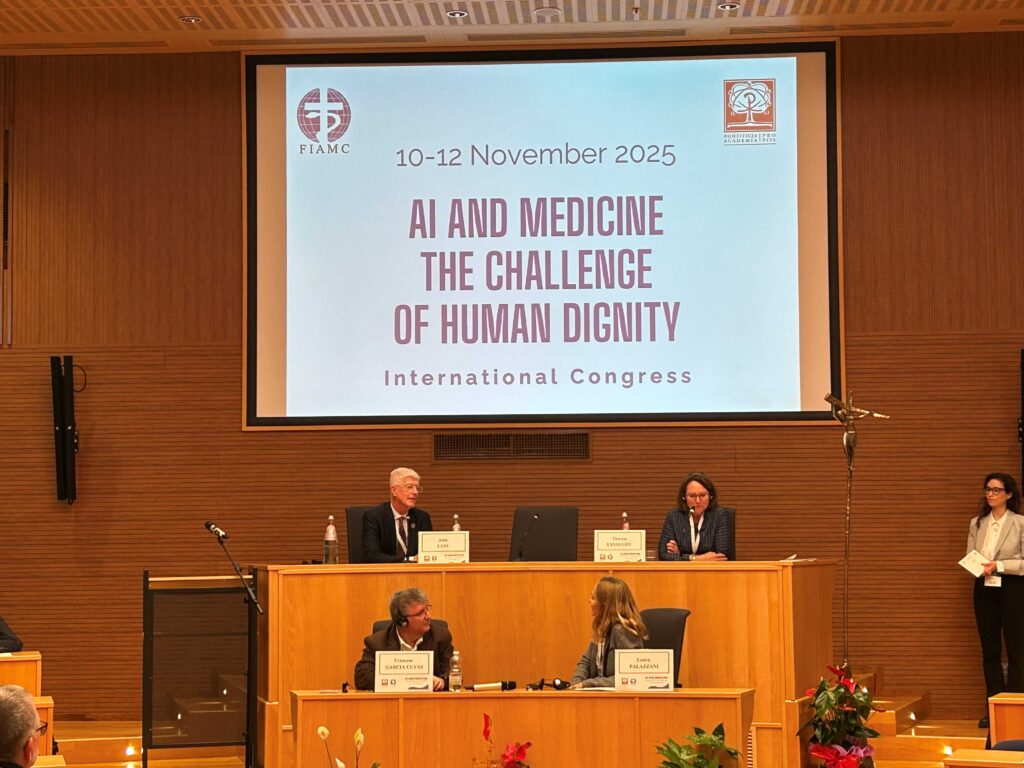
The vital question of how Artificial Intelligence (AI) will affect the practice of medicine recently drew medical professionals, ethicists and clergy from around the world to Rome to attend the AI and Medicine International Congress, jointly sponsored by the Vatican’s Pontifical Academy of Life (PAL) and the Federation of International Catholic Medical Associations known as FIAMC.
“The conference was an opening salvo in looking to better understand the dignity of man in light of this new technology,” said Dr. Craig Treptow, the North American Federation president of FIAMC and a CMA past president. “As Pope Francis wrote in Antiqua et Nova, ‘healthcare professionals have the vocation and responsibility to be guardians and servants of human life.’ CMA needs to be at the forefront of these conversations to fulfill that vocation.”
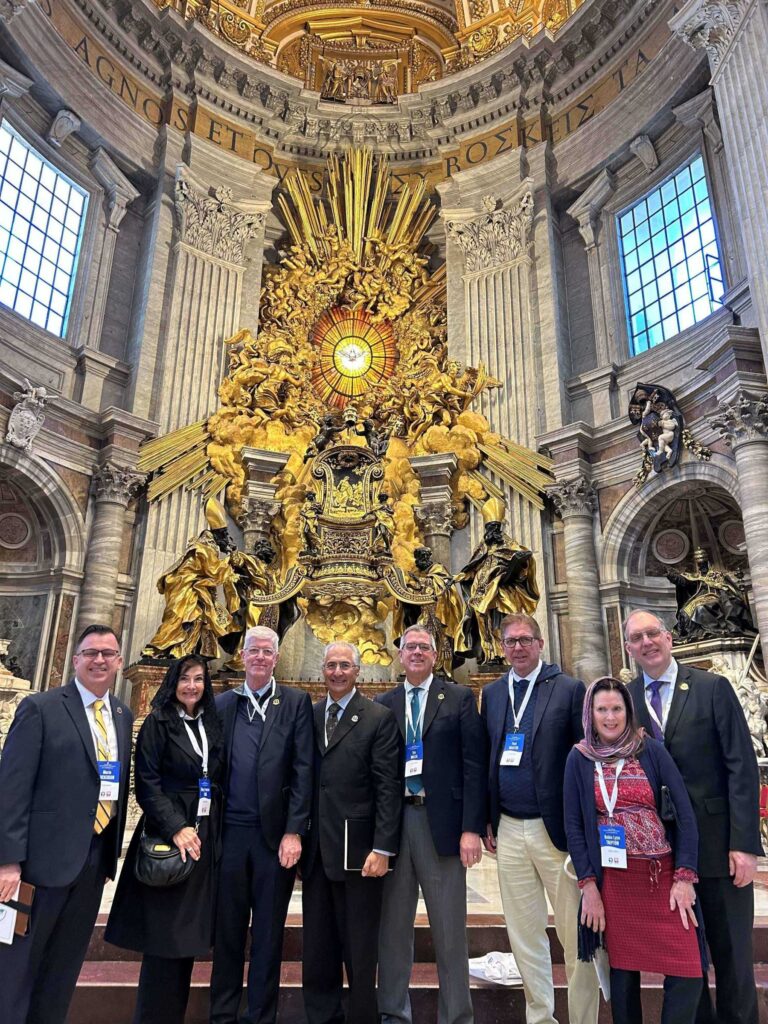
CMA had a strong delegation of members attend the Nov. 10-11 International Congress, demonstrating the unwavering commitment to advocacy and ethical practices in healthcare by the association. In addition to Dr. Treptow, the delegation included Dr. Jack Lane, the vice president of FIAMC; Dr. Paul Braaton, chair of outreach for FIAMC; Dr. Tim Millea, US representative to FIAMC and CMA Health Care Policy Committee chairman; Dr. Maricela Testai, US representative to FIAMC; Dr. Al Oliva, CMA board treasurer; and Mario Dickerson, CMA executive director.
Both Pope Francis and Pope Leo XVI have emphasized the ethical use of AI for the dignity of the patient. In his message to participants, Pope Leo said, “There is no doubt that technological development has brought, and continues to bring, significant benefits to humanity, particularly in the fields of medicine and health. In order to ensure true progress, it is imperative that human dignity and the common good remain resolute priorities for all, both individuals and public entities.”
With this imperative in mind, the conference clearly delineated several areas of concern in the use of such technology noting that clinical oversight and judgement must always be present in the use of AI, and its use requires transparency, bias awareness, and patient consent. Presenters discussed the boundaries and the ethical limitations of AI as a tool in health care.
According to a statement released by FIAMC, it is crucial that AI is “never a substitute for the physician’s expertise, empathy, or accountability.”
FIAMC Vice President Dr. Jack Lane believes that one way to ensure these principals are respected is by consulting with medical professionals and bioethicists before the design and implementation of AI applications into medical practice.
“The risk is that both patient and health care professionals become commodified,” Dr. Lane said. “We all know that human relationships are difficult and require hard work on the part of both parties. The same holds for the doctor-patient relationship. The risk of AI is that we ‘settle for less’ because it is quicker, easier and less messy from an emotional and personal standpoint. Of course, the hard work of human relationships is what makes life worth living and, from a faith standpoint, where we meet Christ in our everyday lives. It would be a great poverty if doctors and other health care professionals were replaced by ‘the machine.’”