Photo:
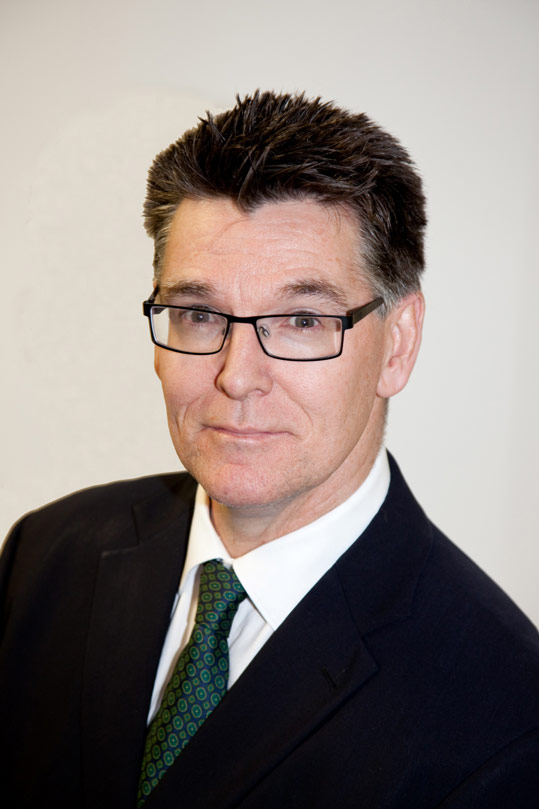
Dr Eamonn Mathieson
03 October 2025
Melbourne Catholic
- Home
- News and stories
- Catholic doctors seek truth and integrity in medicine
‘The straightforward pathway had been lost’, goes the opening line of Dante Alighieri’s Divine Comedy. For Catholic doctors, the landscape of modern healthcare can feel like being trapped in a maze of ethical dilemmas driven by technological and societal change, but there are plans to address that at an upcoming conference and offer a sense of hope.
The second Australian Catholic Medical Association (CMAA) conference, to take place in Melbourne on 18 and 19 October with the theme ‘Truth and Integrity in Medicine’, aims to provide a distinctly Catholic perspective on contemporary ethical challenges in healthcare, such as abortion and euthanasia.
The event is modelled on Dante’s Divine Comedy, a journey from hell to heaven, explains Dr Eamonn Mathieson, the national chair of the CMAA. ‘It is a progression from the inferno to the paradiso … It’s really sort of a survey of the entire thing, from the depths of hell to paradise, with purgatory in between,’ he says. ‘That’s a Catholic framing of the thing through a Dantean lens.’
What is healthcare? What is the good for the human person?
In the Inferno sessions on integrity in psychiatry and on some of the issues most giving rise to moral uncertainty—the transgender movement and the harms of pornography, for example—speakers will confront some of the challenges, seeking clarity around dealing with them.
Dr Mathieson says the concept of truth is central, particularly for CMAA members who find their views at odds with prevailing medical and social norms. ‘Particularly over the last few years, [in] the contest [of ideas]—for instance: What is healthcare? What is the good for the human person, and therefore, what is the human person?—I think a Catholic healthcare perspective differs from some of the prevailing ideas about that.
‘As a consequence of having a different opinion about the contentious issues such as abortion, IVF, issues of contraception, euthanasia … the Catholic perspective is at odds with much of the prevailing views about those topics, particularly those who are in positions of influence and power. So many of our members have had issues with the regulatory bodies, for example, in expressing or practising in accordance with the Catholic understanding of what is proper healthcare.’
Where practitioners are navigating conflict between Catholic teaching and legal mandates—such as in what is currently called ‘gender-affirming care’ for minors—Dr Mathieson says there is hope for change. ‘I think this is a particular issue that is in considerable dispute right at this particular time. It’s very clear that the impetus is now changing across the world … from the Cass Review [the independent UK review into gender identity services for children] to what’s happening in Finland and Denmark and in the United States. Australia is often very slow in keeping up with what happens around the world.’
He frames the conflict as a contest of philosophical views about what the human person is. The CMAA’s role is to support practitioners who have been caught up in that circumstance by writing to regulatory authorities and medical bodies to put their position across. ‘You need an organisation with expertise that can critique and challenge … the prevailing ideas about particular contentious issues,’ he says.
The conference is designed to reflect the universal, or catholic, nature of the Church’s approach. ‘It’s touching on many aspects of healthcare—a holistic approach, I suppose—from the psychological to the spiritual, to the physical, and then also the ethical aspects of things. Instead of being very narrow and specific, it’s very broad,’ Dr Mathieson says.
When asked about potential divergence of views among Catholic medical professionals on these sensitive issues, Dr Mathieson suggests there is significant unity. ‘This is the good thing about being a Catholic healthcare practitioner who abides by the teachings of the Catholic Church: it’s actually pretty straightforward.’
The Purgatorio sessions will build on Catholic teaching, and focus on a practical pursuit of virtue and ethical excellence in fields such as fertility and mental health. During this part of the conference, the legacy of Dr Sr Mary Glowrey will be held up as an example of what it means to be a good Catholic doctor, living a life fully integrated with faith and practice.
The Paradiso sessions will contemplate the highest ideals of Catholic healthcare in harmony with science and God. Dr Mathieson will be presenting one of the topics on this last day: informed consent, a principle he believes was sidelined in recent years. ‘We wrote a paper regarding coercing of conscience. There are challenges ethically in regard to that, in both Catholic understanding of what conscience is and also an understanding of the matter at hand.
However, Dr Mathieson is optimistic about the long-term prospects for a recovery of what he sees as foundational truths in medicine. ’There’s always hope in the future. If you’re grounded in a concept of what is true and good and beautiful, … any deviations from that are usually [resolved]. I think that reality has its way of imposing itself.’
Preceding the conference, on the evening of Friday 17 October, will be a White Mass for healthcare workers at St John the Evangelist Church in East Melbourne, celebrated by Archbishop Peter A Comensoli. It is the first time a White Mass has been held in Melbourne, and Dr Mathieson hopes it will become a regular event. The service will be followed by the Nicholas Tonti-Filippini Oration, delivered by Archbishop Anthony Fisher OP, titled ‘Reflections on Evangelium Vitae and Australian Culture—30 years on.’
The ‘Truth and Integrity in Medicine’ conference will be held from 17 to 19 October 2025 at the Catholic Leadership Centre in East Melbourne.